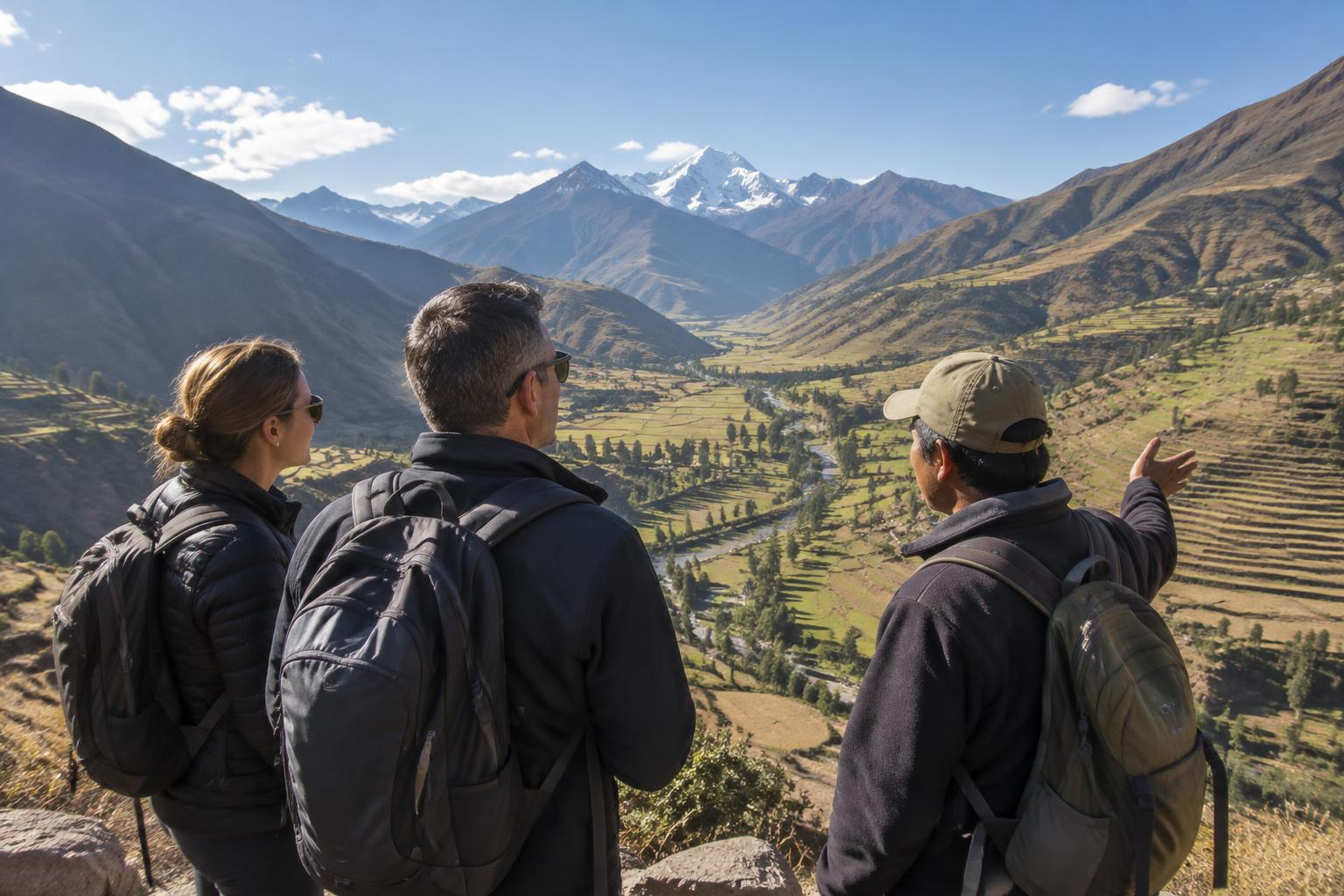
A practical guide to choosing a Peru tour operator or DMC: how to verify registration, understand who operates on the ground, and ask better questions before confirming a journey.
Peru has no shortage of companies selling tours. The harder question is who actually designs, coordinates and supports the journey once travelers arrive. A website may belong to a local inbound operator, an international agency, an online marketplace or a reseller using another company's services. That difference matters when an itinerary crosses several regions, a flight changes, weather affects an activity or a traveler needs help after office hours.
This guide does not rank companies or promise that one operator suits every traveler. Instead, it explains how to compare a Peru tour operator or destination management company using evidence: official registration, transparent operating arrangements, qualified guides, written terms and realistic destination knowledge. For agencies and tour operators abroad, these checks are also the foundation of a dependable B2B partnership.
Start with the modelWhat is a Peru DMC or inbound tour operator?
In travel trade language, a destination management company, or DMC, is a local partner that organizes services inside the destination. That can include itinerary design, accommodation, transport, guides, experiences and on-trip coordination. An inbound tour operator performs a similar ground-handling role. In Peru, however, DMC is a commercial description rather than a separate government certification. Travel agencies, wholesalers, retailers and tour operators sit within Peru's broader regulatory framework for travel agencies and tourism.
The practical test is not the label beneath a logo. Ask who contracts each service, who confirms the guides and vehicles, who monitors the itinerary, and who answers locally if plans change. A capable operator may use carefully selected regional partners—Peru is too geographically diverse for every company to own every service—but it should know exactly who is responsible at every stage and remain accountable for the whole program.
Verify firstHow to check whether a Peru tour operator is registered
MINCETUR maintains the Directorio Nacional de Prestadores de Servicios Turísticos Calificados, the official national directory of qualified tourism service providers. Travelers and trade buyers can search it for registered travel agencies and tourism companies. Ask the company for its legal name and RUC, then compare those details with the directory rather than relying only on a trading name. Registration confirms that the business appears in the official system; it is an essential check, but it is not by itself a guarantee of service quality. Official directory: https://consultasenlinea.mincetur.gob.pe/directoriodeserviciosturisticos/DirPrestadores/DirBusquedaPrincipal.
Official tourism guides can also be checked through MINCETUR's directory. A registered guide receives an official guide card and should carry it visibly while working. Where an itinerary requires specialized skills—such as high-altitude trekking or another technical activity—ask what specific training and accreditation the assigned team holds. Do not treat an attractive biography or an unspecified private certificate as a substitute for verifiable credentials.
Protected placesAuthorization matters in Peru's natural areas
For journeys inside protected natural areas, registration as a travel agency may not be the only check. SERNANP, Peru's protected-areas authority, publishes information and, for certain places, lists of authorized tourism operators. This is especially relevant for Amazon programs in areas such as Manu and Tambopata. Confirm authorization for the specific reserve or park involved; permission in one area should not be assumed to apply everywhere. Official protected-area information: https://visitaareasnaturales.sernanp.gob.pe/.
Machu Picchu follows its own official access system under Peru's Ministry of Culture, with designated circuits and rules that can change. A responsible operator explains which ticket and route fit the proposed visit, avoids promising access before confirmation, and checks the current official requirements at the time of travel. Static advice copied from an old itinerary is not enough for a high-demand site whose access arrangements evolve.
Look behind the itineraryWhat reliable local operations look like
A strong proposal makes responsibility visible. It identifies the services included, the standard of transport, the nature of guiding, the pace of travel and the assumptions behind availability. It also distinguishes confirmed arrangements from ideas that still require checking. For multi-region Peru journeys, ask whether one operations team oversees the complete file and how handovers between Lima, Cusco, the Amazon, Arequipa, Puno or the north are managed.
Written cancellation and refund terms should arrive before payment. Buyers should also ask for appropriate insurance information, emergency contacts and the procedure for disruptions. These are sensible due-diligence practices, not a claim that every document has the same legal status. The important point is clarity: what happens if an activity closes, transport is delayed, weather changes the plan or a traveler cannot continue?
Match expertise to placeChoosing an operator for different regions of Peru
Cusco, the Sacred Valley and Machu Picchu demand careful sequencing, altitude-aware pacing and current access knowledge. Trekking programs add questions about guide-to-traveler ratios, emergency procedures, porter welfare, equipment and route conditions. The best fit is not simply the company with the largest trek catalogue, but the one that can explain how the journey is operated and adapted for the actual group.
Amazon travel requires a different network and operating rhythm. Boat transfers, lodge coordination, changing river or trail conditions and protected-area rules make current local communication essential. Wildlife should never be guaranteed. Ask how guides manage observation responsibly, which authority governs the area and whether the operating partner is authorized where required.
Arequipa and the Colca Valley, Lake Titicaca, coastal Peru and the northern archaeological routes each bring different distances, climates and community relationships. A good Peru tour operator will not force every region into the same template. It will explain realistic travel days, where local hosts or specialists participate, how those relationships are agreed, and when an itinerary needs more time rather than more activities.
Buyer awarenessTrust signals and red flags
Useful trust signals include a verifiable legal identity, recent reviews with thoughtful responses, named local contacts, clear inclusions and exclusions, written terms and destination advice that acknowledges uncertainty. For B2B work, also look for prompt operational reporting, brand-neutral documentation when needed, clear payment procedures and a defined escalation contact.
Red flags include pressure to pay before receiving terms, prices that are dramatically lower without a clear explanation, vague answers about who delivers the services, guarantees of wildlife sightings, and the use of protected-area or sustainability language without verifiable evidence. Reviews help, but they should be read for patterns and recency rather than reduced to a single score.
Before paymentQuestions worth asking every Peru tour operator
Ask for the legal company name and RUC; confirm the official registration; identify who operates each part of the trip; request the name and credentials of guides when available; clarify group size, vehicle standard and activity difficulty; confirm what is included; obtain cancellation and refund terms; and ask who provides support during the journey. For protected areas or regulated sites, ask which current authorization, ticket or circuit applies.
The most useful answer is rarely a sales superlative. It is a precise explanation backed by documents and local knowledge. Peru rewards thoughtful planning: distances are substantial, altitude changes the pace, access rules evolve and the strongest experiences often depend on relationships built over time. Choosing the right local partner is therefore less about finding a universal 'best' and more about finding the operator whose capabilities, accountability and style match the journey being designed.
Operator check before confirming
Use this short list for an individual booking or an international agency partnership.
- 01
Official identity
Verify the legal name and RUC in MINCETUR's national tourism directory.
- 02
Ground responsibility
Ask who contracts and supervises every hotel, transfer, guide and experience.
- 03
Qualified guides
Confirm official guide credentials and relevant specialist training.
- 04
Protected areas
Check SERNANP authorization for the specific reserve or park when required.
- 05
Written terms
Read inclusions, exclusions, cancellation, refund and disruption procedures before paying.
- 06
Local support
Know who answers in Peru during the trip and how urgent changes are handled.
Build a Peru program with accountable ground support
Be Peru DMC designs and operates tailor-made Peru journeys for international agencies and tour operators, with local coordination from proposal to departure.
Frequently asked questions
How can I verify a tour operator in Peru?
Ask for the company's legal name and RUC, then search MINCETUR's Directorio Nacional de Prestadores de Servicios Turísticos Calificados. Match the official details with the proposal and payment information.
Is a DMC a government certification in Peru?
No. DMC is a travel-industry description for a local destination management partner, not a separate Peruvian government certification. Verify the company's official travel-agency registration and its actual operating role.
How do I check a tourism guide in Peru?
MINCETUR's national directory includes official tourism guides. Ask for the guide's full name and current official credential, especially for specialized activities.
Do Amazon tour operators need special authorization?
For certain protected natural areas, including some Amazon destinations, SERNANP requires authorized operators. Check the current official requirements and list for the specific reserve or park.
What should be in the cancellation policy?
It should explain deadlines, charges, refunds or credits, supplier conditions and what happens when the operator must change or cancel a service. Obtain it in writing before payment.
What makes a good Peru DMC for an overseas travel company?
Look for transparent local operations, strong destination knowledge, clear B2B communication, reliable emergency support, consistent documentation and the ability to design under the partner's brand without overpromising.
Want your travelers to live this story?
Tell us dates, group size and traveler profile. We design and operate the program under your brand.
Send us a brief →Illustrative photography