Fresh Peruvian ceviche with red onion, sweet potato and corn on a restaurant table in Lima.Yogma · CC BY 2.0 · Wikimedia Commons
Experiences · Culinary Exploration

A Journey Through Peru's Extraordinary Flavors

From Lima's celebrated culinary scene to ancestral Andean kitchens and the flavors of the Amazon, discover Peru through its remarkable food culture.

Customizable culinary experiences and complete Peru programs for travel agencies and tour operators, designed by our Cusco-based team.

Why Peru

A country understood through its kitchens

Peru's food culture follows its geography: Pacific seafood, Andean potatoes and maize, and Amazonian fruits and river fish. Markets reveal how these ingredients move between regions and shape everyday cooking.

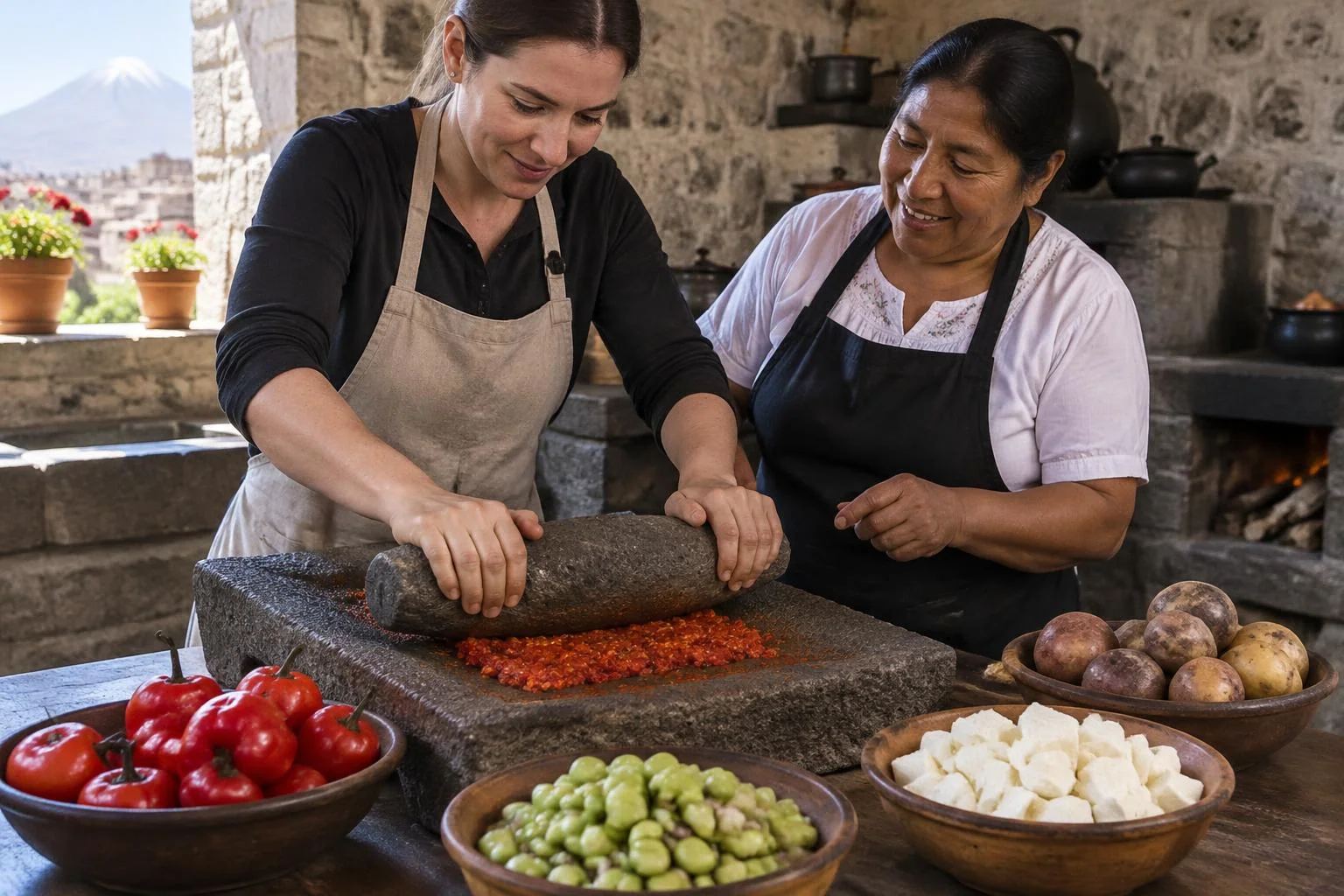
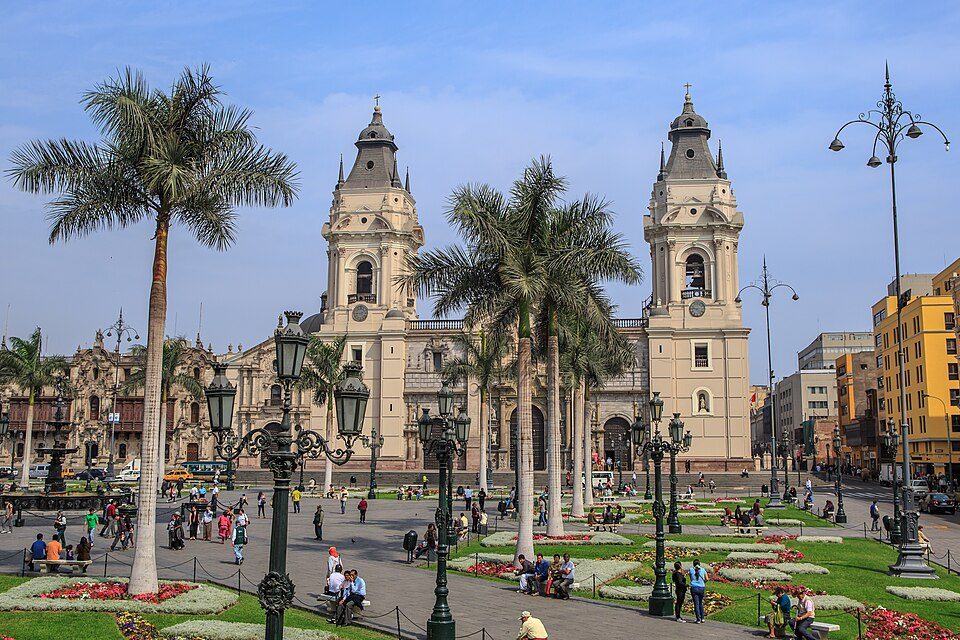
Lima brings coastal traditions into conversation with criollo, Nikkei and chifa cuisines. In Arequipa, picanterías preserve a distinctive regional table; in the Sacred Valley, farming knowledge gives familiar ingredients new depth.

Build programs around market visits, hands-on cooking and conversations with willing local producers. From family-friendly kitchens to private-chef experiences where available, each concept can reflect your clients' interests, pace and dietary requirements.

Signature experiences

Seven ways to taste Peru

Colorful produce stalls displaying Peruvian fruits, potatoes and vegetables in a Lima market.Miguel Angel Chong · CC BY 3.0 · Wikimedia Commons
Lima

Lima Markets & Peruvian Cooking Classes

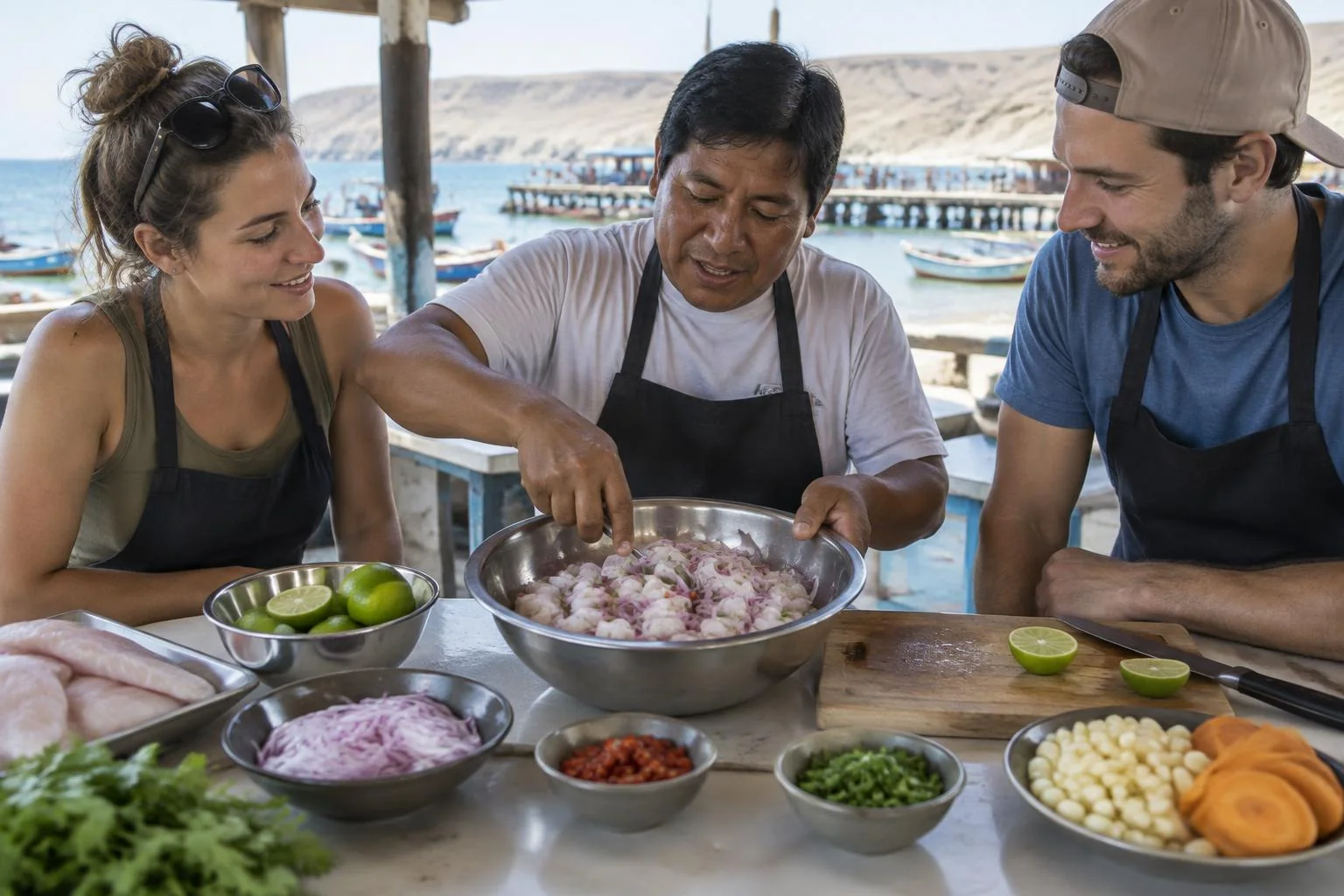
Explore a neighborhood market before a hands-on introduction to Peruvian cooking, using seasonal produce and traditional ingredients. Adapt the menu and teaching format for private travelers, families or groups, with dietary requirements reviewed in advance.

⏱
Typically half a day
◎
First-time visitors, families and hands-on food enthusiasts
Lima-style fish ceviche with red onion, corn and sweet potato.Be Peru DMC
Lima · Paracas–Ica

Ceviche, Pisco & Coastal Gastronomy

Explore Pacific flavors through ceviche preparation and coastal cooking, with an optional introduction to pisco in Lima or a separately planned Ica extension. Raw-seafood preferences and non-alcoholic alternatives are agreed in advance; alcohol service is subject to current official regulations.

⏱
Typically half a day; longer with an Ica extension
◎
Couples, culinary travelers and adult special-interest groups
Andean maize and fresh seasonal ingredients on a table in the Sacred Valley.McKay Savage from London, UK · CC BY 2.0 · Wikimedia Commons
Cusco · Sacred Valley

Sacred Valley Farm-to-Table Experiences

Connect Andean maize, potatoes and seasonal crops with the people who grow and cook them. Producer visits and a farm-inspired meal are arranged around host participation and agricultural rhythms, with private-chef formats explored where available.

⏱
Typically half a day to a full day
◎
Luxury FITs, families and travelers interested in food origins
Potatoes, maize and other ingredients prepared for a pachamanca meal in the Sacred Valley.Javi270270 · CC BY-SA 3.0 · Wikimedia Commons
Cusco · Sacred Valley

Traditional Andean Cooking & Pachamanca

Discover pachamanca, a cooking tradition using heated stones, through a host-led introduction and shared meal. Preparation style varies by household and region; outdoor cooking depends on suitable conditions, and participation respects hosts' routines rather than staging spiritual practices.

⏱
Typically half a day
◎
Cultural travelers, private groups and multigenerational families
Rocoto relleno served with potato gratin in an Arequipa picantería.Be Peru DMC
Arequipa

Arequipa Picanterías & Regional Cuisine

Explore Arequipa's picantería culture through regional dishes such as rocoto relleno and chupe de camarones, when offered. Daily menus, spice preferences and dietary restrictions guide the selection; ingredient sourcing and service remain subject to current official regulations.

⏱
Typically half a day
◎
Regional-cuisine enthusiasts, couples and cultural groups
Arroz con pato served with regional accompaniments in Chiclayo.Dtarazona · Public domain · Wikimedia Commons
Chiclayo · Trujillo · Piura

Northern Peru Culinary Traditions

Build a northern route around dishes such as arroz con pato in Lambayeque, cabrito in La Libertad and seco de chavelo in Piura. Market stops and local kitchens introduce regional ingredients, with the destination mix tailored to transfer times and your clients' interests.

⏱
Typically half a day per city; multi-day regional extensions
◎
Repeat visitors, food-centered special-interest departures and cultural groups
A juane wrapped in leaves alongside plantains and local produce in Tarapoto.Dtarazona · CC BY-SA 4.0 · Wikimedia Commons
San Martín · Iquitos

Amazonian Culinary Discovery

Discover preparations such as juanes, plantain dishes and seasonal Amazonian fruits through a market visit or hosted cooking encounter. Select one regional gateway for a focused program, with dietary needs, kitchen facilities and responsible ingredient sourcing reviewed before confirmation.

⏱
Typically half a day; multi-day regional extensions
◎
Curious food travelers, educational groups and repeat visitors

Trade planning essentials

Program format
Customizable concepts, not confirmed departures: market visits, private cooking, producer encounters and regional dining.
Ideal travelers
Luxury FITs, couples, families, multigenerational groups and food-centered special-interest departures.
Typical duration
Most individual experiences take half a day; combine them into full-day programs or multi-day journeys.
Regional focus
Lima and Ica for coastal cuisine and pisco; Cusco for Andean ingredients; Arequipa, northern Peru and the Amazon for distinct regional traditions.
Seasonality
Urban culinary programs can work throughout the year. Farm visits, seasonal ingredients and outdoor cooking require date-specific planning.
Activity and altitude
Generally light activity, with standing, market walking and uneven farm paths. Cusco is approximately 3,400 m; allow a gentler arrival schedule.
Dietary requirements
Collect allergies, intolerances, preferences and raw-food restrictions before proposing menus. Cross-contact controls must be checked with each kitchen; allergen-free service cannot be assumed.
Private and group suitability
Private kitchens, chefs and premium dining can be explored where available. Group size, workstations, seating and children's participation depend on the venue.
Booking lead time
Request planning early for private chefs, sought-after tables and specialist groups. Confirm lead times, host participation and operating capacity for each proposal.
Access and service conditions
Confirm market hours, venue access, photography consent and any entrance charges. Alcohol service and any applicable permits are subject to current official regulations; verify at time of booking.
Practical information

Plan the flavors—and the logistics

Altitude and pacing
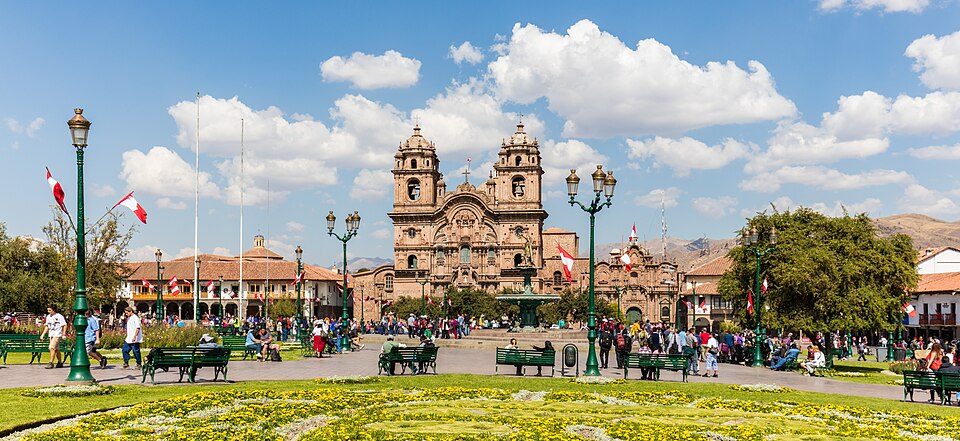
Allow time to adjust when arriving in Cusco, approximately 3,400 m. Keep initial culinary activities unhurried and avoid tightly packed arrival-day schedules.
Machu Picchu extensions
If added to a culinary journey, plan advance tickets, the selected entry circuit, timed admission and coordinated train and road transfers. Entry conditions and restrictions are subject to current official regulations; verify at time of booking.
Transport between regions
Lima–Cusco and many northern or Amazon extensions may require domestic flights. Paracas–Ica is a road extension from Lima; Iquitos requires air access from other major Peruvian cities, with boats for some outlying visits.
Regional seasons
Andean conditions are generally drier from May to September and wetter from November to March. Amazon rain is possible year-round; river conditions affect boat-based visits. Lima's cooler, cloudier months still suit indoor culinary programs.
Responsible encounters
Arrange producer and community visits with host agreement, fair compensation and consent for photography. Respect household routines, minimize waste and favor responsibly sourced ingredients without making unverified sustainability claims.
Who it's for

Menus shaped around your market

Luxury FIT travelers

Private cooking, thoughtfully paced tastings and premium chef-led formats where available.

Couples and honeymooners

Shared cooking and distinctive regional dining woven into a private Peru journey.

Families and multigenerational groups

Adaptable recipes, approachable flavors and age-appropriate tasks, subject to kitchen suitability.

Food-centered special-interest groups

Deeper exploration of regional recipes, ingredients and culinary traditions, with practical group logistics.

Educational groups

Host-led learning about agriculture, food history and Peru's coast–Andes–Amazon connections.

Senior and culturally curious travelers

Comfort-focused pacing, seated tastings and market routes adjusted to mobility needs where feasible.

Where

Distinct regions, distinctive tables

Complete journeys

Turn memorable meals into meaningful journeys

These are customizable journey concepts, not fixed departures. Routing, hosts, menus and inclusions are refined for your clients and confirmed during proposal development.

Why partner with Be Peru DMC?

Local insight behind every culinary program

Cusco-based destination expertise

Build realistic regional combinations with a local team that understands Peru's distances, seasons and highland pacing.

Tailor-made travel design

Shape menus, culinary depth and cultural context around your agency's market, client interests and budget parameters.

Private FIT and group operations

Coordinate cooking formats, venue capacity, transfers and timing for individual travelers or organized groups.

White-label services

Support your brand with customized proposals and agency-facing program information.

Carefully selected local suppliers

Match kitchens, hosts and culinary partners to the brief, reviewing dietary needs and operating conditions before confirmation.

Professional guides and Experience Leaders

Request guiding that connects ingredients with regional history; confirm language and specialist requirements for each program.

On-the-ground coordination

Align market visits, dining reservations and onward travel, with operational support as the program unfolds.

Responsible travel practices

Prioritize respectful host relationships, fair treatment of local teams and cultural exchanges based on participation and consent.

Trade resources

Request what your team needs

FAQs for travel professionals

Can these experiences operate privately or for groups?

Yes, programs can be designed for private FITs and groups, subject to suitable venues and host confirmation. Cooking-station capacity, seating, market access and group size determine whether an activity runs together or in smaller rotations.

Can menus accommodate allergies, dietary preferences and children?

Share dietary requirements, allergies, children's ages and raw-food preferences at inquiry stage. We review substitutions, kitchen practices and age-appropriate participation with each venue. Not every traditional dish can be adapted, and allergen-free environments or elimination of cross-contact cannot be guaranteed.

How far ahead should agencies request a culinary program?

Start as early as possible for private chefs, sought-after dining, specialist guides and larger groups. There is no single lead time across regions: reservations, host participation and any deposits are checked for the proposed dates before confirmation.

Are guides available in different languages?

Request the preferred guiding language and level of culinary specialization when submitting the brief. Language availability is confirmed per program; a local cook or producer may work alongside an interpreting guide rather than lead the experience in the clients' language.

Can culinary journeys operate throughout the year?

Many urban market, cooking and dining experiences can be planned year-round. Seasonal produce, Andean rain, Amazon river conditions and outdoor-kitchen arrangements may change the content. Farm and producer visits follow local working schedules, so specific activities are confirmed for the travel period.

What access requirements and logistics should agencies consider?

Review market opening hours, mobility needs, standing time, transfers, kitchen facilities and any entrance requirements before confirming. Alcohol service and any applicable permits are subject to current official regulations; verify at time of booking. A Machu Picchu extension also requires advance ticket planning, circuit selection, timed entry and coordinated transport.

Let's Create an Extraordinary Journey for Your Clients

Tell us what your clients are looking for, and our local team will help design a customized Peru experience.

sales@beperudmc.com · +1 (315) 819-8183

We only use your details to answer this request. We never share them.